DevPik Logo
OpenClawAnthropicAI agentsopen sourceClaudeGPT-5.4agentic AIself-hosted AI

Anthropic Banned OpenClaw — Then It Shipped Its Biggest Update Ever

Anthropic cut off 135,000+ OpenClaw users from Claude subscriptions, triggering up to 50x cost increases. OpenClaw's response? Version 2026.4.5 — the biggest release in the project's history, featuring built-in video/music generation, an AI "dreaming" memory system, and an app store for agent skills.

DevPik TeamApril 7, 202614 min read
Back to Blog
Anthropic Banned OpenClaw — Then It Shipped Its Biggest Update Ever

The Anthropic Breakup: Claude Subscriptions No Longer Cover OpenClaw

On April 4, 2026, Anthropic dropped a bombshell on the open-source AI community: Claude Pro and Max subscribers can no longer pipe their flat-rate subscription plans through OpenClaw or any other third-party agent framework.

The announcement came from Boris Cherny, Anthropic's Head of Claude Code, who stated that "subscriptions weren't built for the usage patterns of these third-party tools" and that Anthropic is "prioritizing our customers using our products and API."

What changed:

  • Claude Pro ($20/month) and Max subscribers can no longer use subscription credits through OpenClaw
  • Users must now pay separately under "extra usage" billing — pay-as-you-go at full API rates
  • Pricing: $3/$15 per million tokens for Sonnet 4.6, $15/$75 per million tokens for Opus 4.6
  • Users face cost increases of up to 50x their previous monthly spend
  • Anthropic offered a one-time credit equal to the monthly plan cost, redeemable until April 17
  • Pre-purchase bundles available with up to 30% discount

The timing is notable. Just weeks earlier, in March 2026, Anthropic committed $100 million to the Claude Partner Network — a clear signal that enterprise partnerships take priority over the open-source community that helped make Claude popular in the first place.

More than 135,000 OpenClaw instances were estimated to be running at the time of the announcement. That's 135,000 users who woke up to find their workflow broken and their costs about to skyrocket.

Peter Steinberger, OpenClaw's creator, didn't mince words. After attempting to negotiate a delay with Anthropic (he managed to push enforcement back by a single week), Steinberger wrote: "First they copy some popular features into their closed harness, then they lock out open source." He called it "a betrayal of open-source developers."

The community reaction was immediate and fierce. Reddit threads across r/Anthropic, r/ClaudeAI, and r/technology exploded with users sharing workarounds, expressing frustration, and debating whether to switch providers entirely. YouTube creators like Alex Finn and Matthew Berman published urgent guides within hours. The phrase "RIP OpenClaw" trended — though as we'll see, OpenClaw's response proved that premature.

For more context on how agentic AI frameworks are reshaping development, and how this fits into the broader AI landscape, check out our previous coverage.

OpenClaw's Meteoric Rise: From Weekend Hack to GitHub's Most-Starred Project

To understand why the Anthropic ban matters so much, you need to understand just how big OpenClaw has become.

OpenClaw started as a weekend side project. In November 2025, Austrian developer Peter Steinberger open-sourced a simple AI agent he called "Clawdbot." It was a local-first assistant that could connect to your calendar, email, browser, terminal, and smart home — then learn to automate the repetitive parts of your day.

It went viral. Spectacularly.

The growth timeline:

  • November 2025: Released as "Clawdbot" — a side project by Steinberger
  • Late January 2026: Renamed to "Moltbot" after Anthropic trademark concerns, then to "OpenClaw" three days later
  • February 14, 2026: Steinberger joined OpenAI, transitioning OpenClaw to an independent 501(c)(3) foundation
  • February 2026: Reached 100,000 GitHub stars in under 48 hours at peak viral growth
  • March 3, 2026: Surpassed React to become GitHub's most-starred software project at 250,000 stars — a milestone React took over a decade to reach
  • April 2026: Now at 346,000 GitHub stars and 47,700+ forks

OpenClaw beat React's 10-year GitHub record in roughly 60 days. It is the fastest-growing open-source project in GitHub history.

Why developers love it:

  • Local-first: Runs on your machine (Mac, Windows, Linux, Android, iOS) — no cloud dependency
  • Channel support: Connects to 24+ messaging channels — WhatsApp, Telegram, Slack, Discord, Signal, iMessage, Teams, Matrix, WeChat, and more
  • Self-hosted: You own your data. No vendor lock-in. No corporate gatekeeper
  • Open source: Full transparency, community-driven development
  • 42,000+ active self-hosted instances by March 2026

This is the project Anthropic just antagonized. And this is the community that just received OpenClaw's most ambitious update yet.

OpenClaw 2026.4.5: Everything in the Biggest Release Yet

Released on April 6, 2026 — just two days after Anthropic's ban — OpenClaw 2026.4.5 is the largest update in the project's history. Whether the timing was intentional or coincidental, the message is clear: OpenClaw isn't going anywhere.

Here's everything that shipped:

Built-in Video and Music Generation

OpenClaw agents can now generate video and music directly within the assistant workflow. No external tools, no API juggling — just ask your agent to create a video or compose a track.

Supported providers include xAI Grok Imagine Video, Runway, Alibaba, Google Lyria, MiniMax, and local ComfyUI. New tools video_generate and music_generate are available out of the box.

Practical use cases: marketing prototyping, content creation, social media workflows, and creative brainstorming — all without leaving your agent environment.

"Dreaming" Feature Goes GA (General Availability)

This is the most genuinely novel feature in any AI agent framework right now. OpenClaw agents now have a Dream Diary system.

During REM-like processing stages, the agent surfaces "lasting truths" — insights it has learned from your conversations and workflows. It writes these to a DREAMS.md file that you can review and edit.

How it works:
- Dreaming goes through three phases: Light, Deep, and REM
- Light and REM phases add recency-decayed boosts via memory/.dreams/phase-signals.json
- The system identifies patterns, recurring topics, and emerging insights
- After each cycle, a plain-English summary is written to DREAMS.md
- REM preview tooling: openclaw memory rem-harness, promote-explain
- Deep promotion is replay-safe — reruns reconcile instead of duplicating entries

This isn't just memory. It's an AI agent that self-reflects and builds persistent understanding over time. Think of it as your agent developing intuition about how you work.

Claude CLI Loopback MCP Bridge

Ironic timing given the Anthropic ban, but still significant: OpenClaw tools are now exposed to background Claude CLI runs through an MCP bridge. The implementation switched to stdin + stream-json partial-message streaming, providing live progress for long replies and clean session/usage metadata.

ACPX Runtime Embedded

The Agent Communication Protocol runtime is now built directly into the bundled plugin. No more external ACP CLI hop needed. This means hardened live ACP session binding and reuse — fewer moving parts, more reliability.

Structured Task Progress

Experimental structured plan updates and execution item events allow compatible UIs to show step-by-step progress during long-running agent tasks. If you've ever wondered what your agent was doing during a complex multi-step operation, this is your answer.

Prompt Cache Optimization

  • Deterministic MCP tool ordering
  • Better compaction and embedded image history
  • Normalized system-prompt fingerprints
  • New diagnostic: openclaw status --verbose for cache diagnostics

These optimizations mean lower token usage and faster responses — particularly important now that many users are paying per-token.

ClawHub — App Store for AI Agent Skills

ClawHub lets you search, view details, and install skills directly from the Control UI Skills panel. Think of it as an app store for your AI agent's capabilities. Browse community-built skills, install with one click, and extend what your agent can do.

12 New Languages for Control UI

Full localization added for: Chinese, Portuguese, German, Spanish, Japanese, Korean, French, Turkish, Indonesian, Polish, Ukrainian, and more.

iOS and Matrix Exec Approvals

  • iOS: Push notification → in-app approval modal for exec commands
  • Matrix: Native exec approval prompts with account-scoped approvers and room-thread aware resolution

Plugin System Improvements

  • Plugin config TUI prompts during onboarding for guided setup
  • openclaw plugins install --force for replacing existing plugins
  • MiniMax auto-enable for image generation

What Developers Should Do Right Now

If you're currently running OpenClaw with Claude, here's what to do immediately:

Option 1: Switch to Claude API Key (Stay with Claude)

You can still use Claude with OpenClaw — you just have to pay API rates instead of subscription rates. Get an API key from console.anthropic.com and configure it in OpenClaw.

Cost reality check:
- Claude Pro subscription was $20/month flat
- API pricing: Sonnet 4.6 at $3/$15 per million input/output tokens, Opus 4.6 at $15/$75
- Heavy users report estimates of $200-1,000+/month depending on usage
- The Alex Finn workaround: use Opus as the orchestrator, cheaper models as the execution layer — keeps costs around $200/month

Option 2: Migrate to GPT-5.4 (OpenClaw's New Recommended Provider)

OpenClaw 2026.4.5 removed Claude CLI backend from new onboarding and shifted toward GPT-5.4 as the recommended provider. For a deep dive on GPT-5.4's capabilities, see our complete GPT-5.4 guide.

Option 3: Run Local Models (Zero Vendor Lock-in)

This is the nuclear option — and increasingly viable:

  • [Gemma 4](https://devpik.com/blog/google-gemma-4-complete-guide): Google's latest open-weight model, excellent for agent workflows
  • Qwen3-Coder-Next: Strong coding performance, runs locally
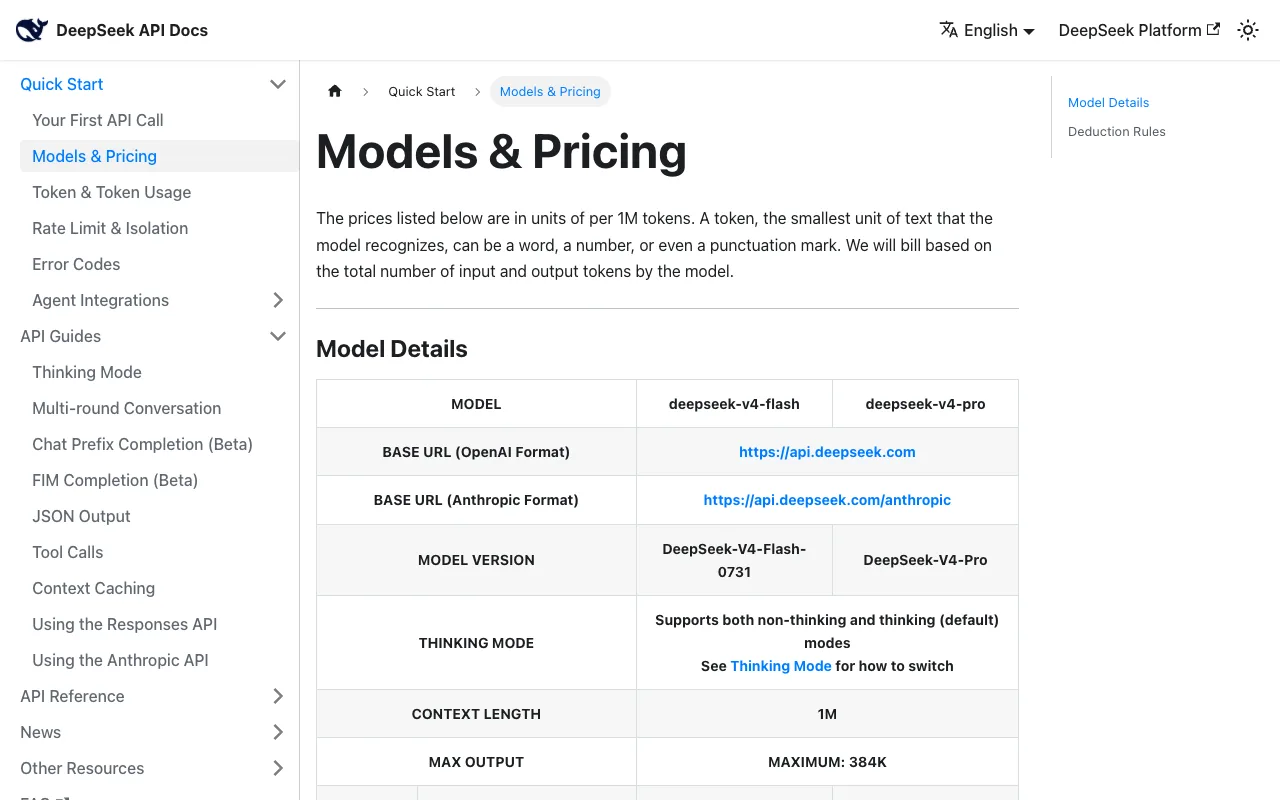
  • [DeepSeek V4](https://devpik.com/blog/deepseek-v4-complete-guide): Competitive with frontier models at a fraction of the cost
  • OpenClaw 2026.4.5 adds new bundled providers including Qwen, Fireworks AI, StepFun, MiniMax, and Ollama Web Search

As one X user put it: "If you have a local model running on your Mac mini, no corporation will ever be able to ban you."

The Cost Comparison

ProviderMonthly Cost (Heavy Use)Vendor Lock-in Risk
Claude Pro (old)$20/mo flatHIGH (just proven)
Claude API$200-1,000+/moMedium
GPT-5.4 API$150-600/moMedium
Gemini API$100-400/moMedium
Local (Gemma 4/Qwen3)$0 (hardware cost)None

The bigger picture here is unmistakable: this is the same tension as Linux vs. Windows, but for AI. Corporate AI platforms will always prioritize their own products and revenue. Open-source, self-hosted AI agents represent the only path to true independence.

For a broader perspective on this shift, read our coverage of agentic AI and the Claude Code source code leak that revealed how deeply Anthropic is building competitive features.

The Open Source vs. Corporate AI War Is Here

Anthropic's move isn't just about OpenClaw. It's a signal of where the entire AI industry is heading.

Consider the timeline:

  1. Anthropic builds Claude — the open-source community adopts it enthusiastically
  2. OpenClaw builds a massive ecosystem on top of Claude — 346K stars, 135K+ instances
  3. Anthropic copies popular OpenClaw features into their closed-source Claude Code product
  4. Anthropic cuts off the open-source community from affordable access
  5. Anthropic commits $100M to enterprise partnerships

This is the classic platform play: attract developers, build lock-in, extract value. We've seen it before with every major platform shift.

But here's what's different about AI: the models are converging. GPT-5.4, Gemini, Gemma 4, DeepSeek V4, Qwen3 — they're all getting remarkably good. The moat isn't the model anymore. It's the ecosystem.

And OpenClaw has the ecosystem. 346,000 GitHub stars. 24+ messaging channels. Native apps on every platform. ClawHub for extensibility. A community that's clearly willing to fight for it.

The smartest take from the community came from Alex Finn on X: "In 6 months the local models will be as good as Opus 4.6 and all of this will be forgotten."

He's probably right. And that's exactly why self-hosted, open-source AI agents like OpenClaw matter more than ever. When you control the agent layer, you can swap the model underneath at any time. No single corporation can pull the rug.

At DevPik, we believe in tools that put you in control — just like OpenClaw. All our tools run 100% client-side with zero data sent to any server. Try our 36+ free developer tools including JSON tools and text generators.

Frequently Asked Questions

What is OpenClaw?
OpenClaw is an open-source, self-hosted AI agent that runs locally on your machine (Mac, Windows, Linux, Android, iOS). It connects to your calendar, email, browser, terminal, and 24+ messaging channels to automate tasks. With 346,000 GitHub stars, it is the fastest-growing open-source project in GitHub history.
Why did Anthropic block OpenClaw from Claude subscriptions?
On April 4, 2026, Anthropic stated that Claude subscriptions 'weren't built for the usage patterns of these third-party tools.' Users running OpenClaw with Claude Pro/Max subscriptions consumed significantly more resources than typical subscribers. Anthropic is prioritizing its own products and enterprise API customers, requiring OpenClaw users to switch to pay-as-you-go API billing.
How much does it cost to run OpenClaw with Claude now?
After the ban, using Claude with OpenClaw requires API pricing: $3/$15 per million tokens for Sonnet 4.6, or $15/$75 for Opus 4.6. Heavy users report estimated costs of $200-1,000+ per month, compared to the previous $20/month flat-rate subscription. Alternatives include GPT-5.4 API, Gemini API, or free local models like Gemma 4 and Qwen3.
What is OpenClaw dreaming?
Dreaming is OpenClaw's background memory consolidation system. During light, deep, and REM-like processing phases, the agent reviews conversations, identifies patterns, and surfaces 'lasting truths' — insights it has learned. These are written to a DREAMS.md file. It's essentially an AI agent that self-reflects and builds persistent understanding of how you work.
Can I still use Claude with OpenClaw?
Yes, but not through a Claude subscription. You need to use a Claude API key with pay-as-you-go billing. Alternatively, OpenClaw 2026.4.5 now recommends GPT-5.4 as the default provider and supports many other backends including Gemini, DeepSeek, Qwen, and local models through Ollama.
What are the best alternatives to Claude for OpenClaw?
The top alternatives are: GPT-5.4 (now OpenClaw's recommended provider), Google Gemini API, local models like Gemma 4 and Qwen3-Coder-Next via Ollama, and DeepSeek V4. OpenClaw 2026.4.5 added bundled support for Qwen, Fireworks AI, StepFun, and MiniMax, making it easier than ever to switch providers.
What is ClawHub?
ClawHub is OpenClaw's new app store for AI agent skills, introduced in version 2026.4.5. It lets you search, view details, and install community-built skills directly from the Control UI Skills panel. Think of it as an app store that extends what your AI agent can do — from browser automation to code generation to smart home control.
Is OpenClaw safe to use?
OpenClaw is open source and runs locally on your machine, meaning your data stays on your device. However, with 135,000+ self-hosted instances, security researchers have flagged that misconfigured instances can expose sensitive data. Follow the official security hardening guide, keep your installation updated, and never expose your OpenClaw instance to the public internet without proper authentication.

More Articles