What DeepSeek actually announced
DeepSeek has emailed its API users to confirm that overall API pricing will rise in the near future, and described the magnitude as significant. The announcement landed on August 6, 2026 — six days after DeepSeek V4 Flash 0731 went generally available.
What the notice does not contain is a number. DeepSeek has not published new rates, has not given an effective date, and has said the specific plan will be subject to official notice. Users are told to watch Open Platform announcements and their email.
That combination — confirmed increase, unspecified size, unspecified date — is the awkward part. You cannot budget against it yet, but you also cannot assume today's rate card survives the month. This post covers what you pay right now, what the founder's own stated range would do to that number, and the concrete moves worth making before the change lands.
Why the price is going up
This is a capacity story, not a greed story, and the numbers behind it are striking.
- V4 Flash has been consuming as much as 8 trillion tokens in a single day.
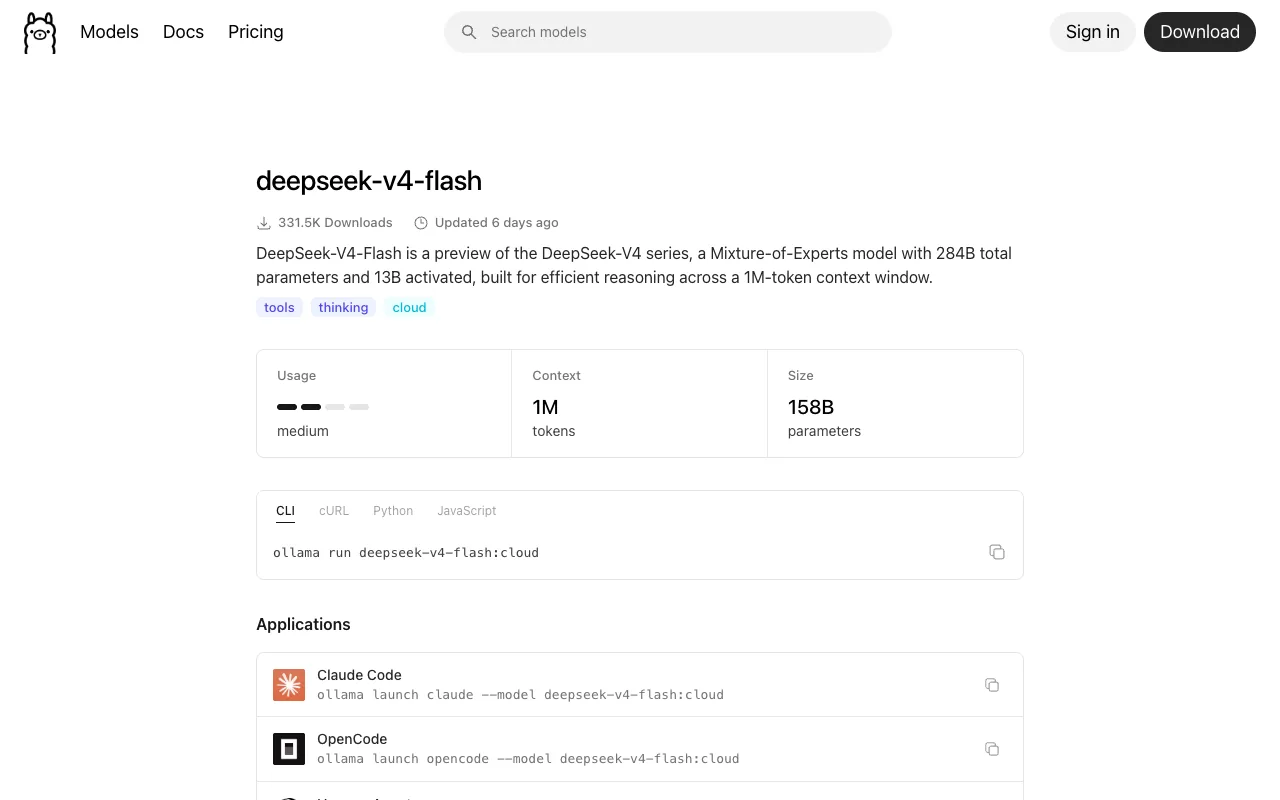
- Ollama described DeepSeek-V4-Flash-0731 as the "fastest growing model ever" by token usage on its platform, and said it was expanding capacity across the United States and Europe to serve it.
- DeepSeek is reportedly running on a compute footprint of roughly 20,000 NVIDIA H100 GPUs.
Put those together and the arithmetic is unforgiving. Pricing designed to be aggressive enough to embarrass Western labs worked exactly as intended, and the resulting demand outran a fleet that is small by frontier-lab standards. At some volume, serving inference below cost stops being a marketing expense and starts being an existential one.
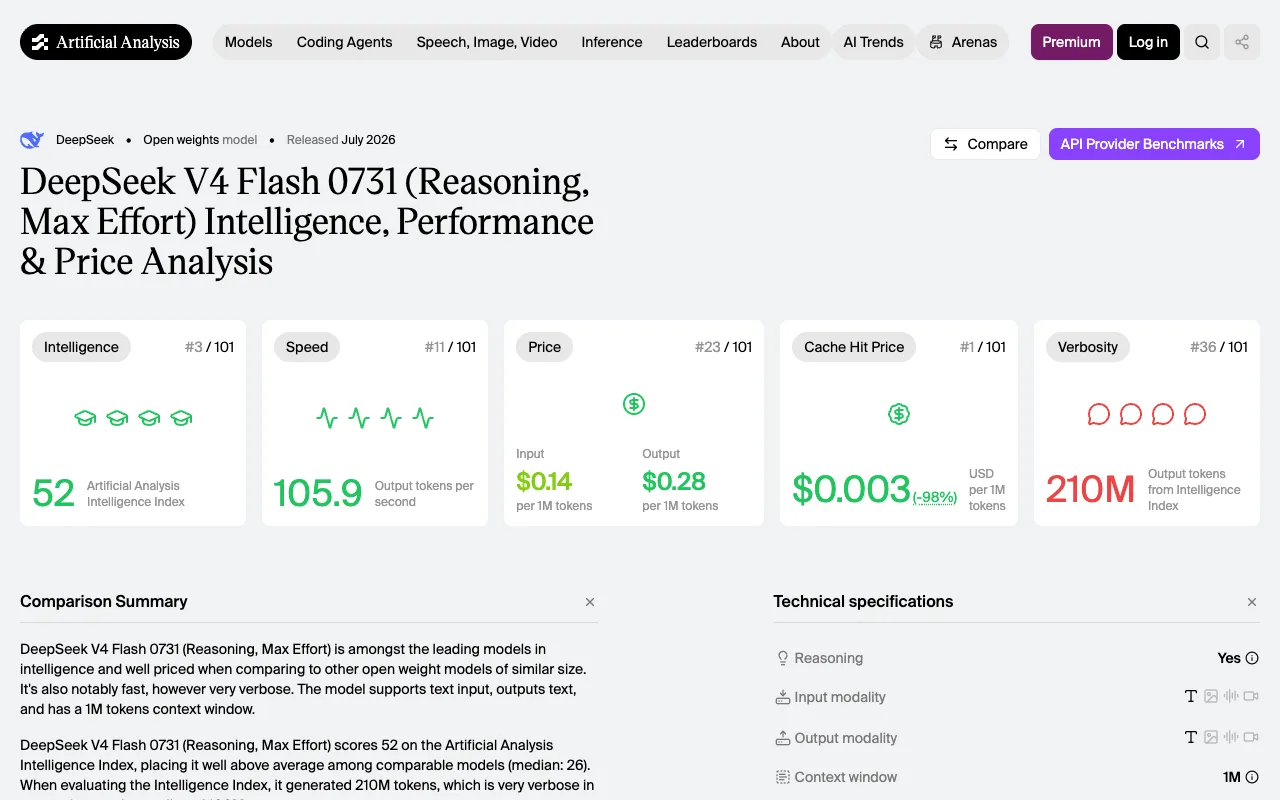
We covered V4 Flash 0731 when it launched and singled out the $0.003 cache-hit rate — ranked #1 of 101 models by Artificial Analysis — as the mechanism behind its economics. That rate is precisely the kind of thing that becomes unsustainable when a model becomes the fastest-growing on the market.
What you pay today — the baseline to measure from
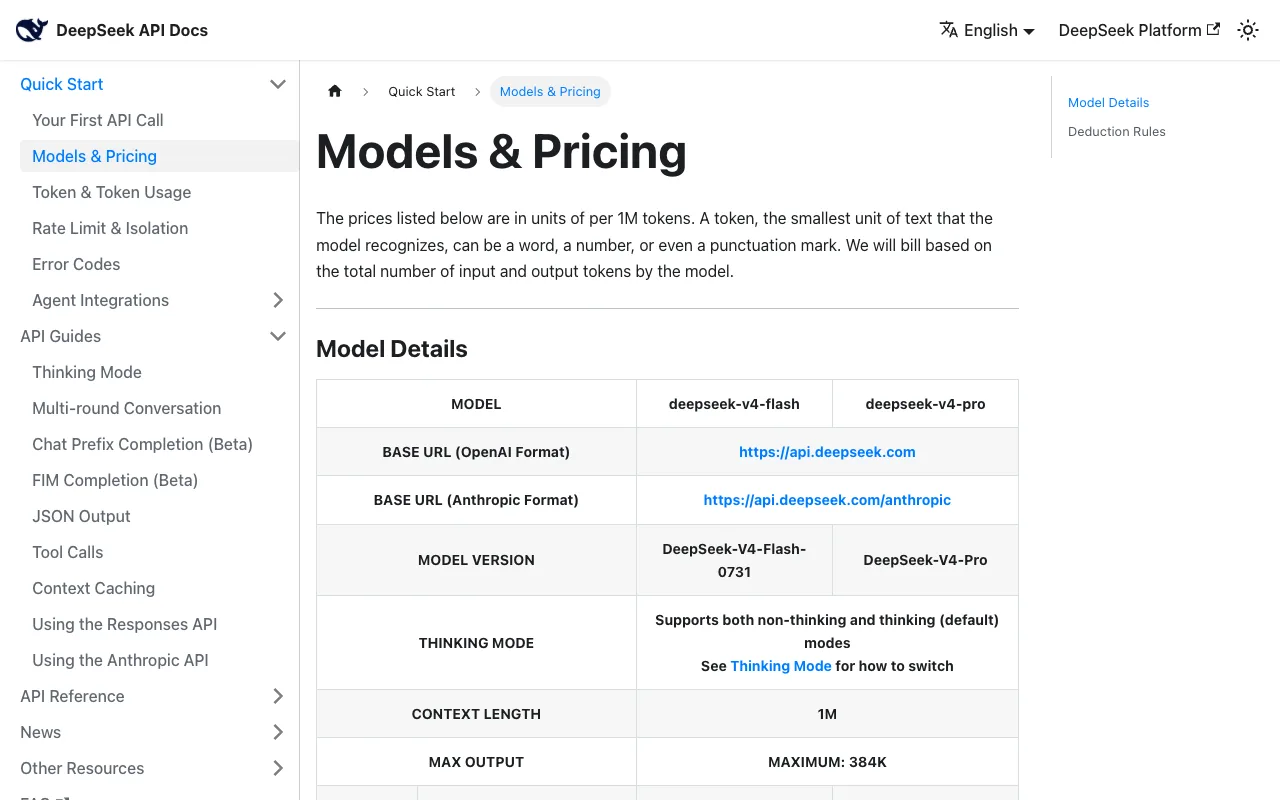
Current published rates, per 1M tokens, straight from DeepSeek's pricing docs:
| Model | Input (cache miss) | Input (cache hit) | Output |
|---|---|---|---|
| deepseek-v4-flash | $0.14 | $0.003 | $0.28 |
| deepseek-v4-pro | $0.435 | — | $0.87 |
Both models carry a 1M-token context window and a 384K maximum output, and support thinking and non-thinking modes (thinking is the default).
Record these numbers now. Once new pricing lands, the old rate card usually disappears from the docs, and you will want the baseline to calculate what actually changed rather than relying on memory or a news summary.
What 2×–10× actually looks like
DeepSeek founder Jun Song addressed the backlash directly on X, arguing that even after a 2× to 10× increase, DeepSeek would still likely undercut most Western rivals. That is not an official rate card, but it is the only range anyone at the company has put a number on, so it is the honest basis for planning.
Applied to V4 Flash:
| Today | 2× | 5× | 10× | |
|---|---|---|---|---|
| Input (cache miss) | $0.14 | $0.28 | $0.70 | $1.40 |
| Input (cache hit) | $0.003 | $0.006 | $0.015 | $0.03 |
| Output | $0.28 | $0.56 | $1.40 | $2.80 |
Song's claim survives at the top of that range, but with less room than the framing suggests. At 10×, V4 Flash input hits $1.40/M — which is more than Meta's Muse Spark 1.2 standard tier charges for input ($1.25/M), a model we looked at yesterday that scores 54 on the Artificial Analysis Intelligence Index against V4 Flash's 50.
Output is where the advantage holds up: $2.80 against Muse Spark's $4.25 is still a clear win, and against frontier closed models it is not close.
So the useful read is not "DeepSeek stops being cheap." It is that at the upper end of the founder's own range, DeepSeek stops being categorically cheap and becomes ordinarily cheap — a normal competitor you compare on the merits rather than an obvious default. If your workload is input-heavy, that transition matters to you more than the headline.
The cache-hit rate is your biggest lever
Look again at the table above. Today the gap between a cache miss and a cache hit is 47× ($0.14 vs $0.003). Even at a 10× increase, that ratio is unchanged — $1.40 against $0.03.
That is the single most actionable fact in this story. A price rise multiplies whatever your current bill is, so the fastest way to blunt it is to shrink the bill first, and context caching is the lever with the most slack in it for most agent workloads.
Practical version:
- Keep the stable prefix genuinely stable. Caching keys on exact prefixes. A timestamp, a request ID, or a shuffled tool list at the top of your system prompt invalidates the cache on every call, and most teams do at least one of these without realising.
- Put volatile content last. System prompt, tool definitions, and repository context first; the user's turn and anything per-request at the end.
- Measure your hit rate before assuming it is good. If you have never checked, assume it is worse than you think.
An agent loop that re-reads a 50k-token repository map across 40 turns is either paying 40 cache misses or 39 cache hits, and the difference between those two bills is roughly two orders of magnitude. Fixing that before the increase lands is worth more than any provider switch.
Reducing your exposure before it lands
Beyond caching, three moves worth making this week.
1. Make the provider swappable now, not later. DeepSeek exposes both an OpenAI-format endpoint (https://api.deepseek.com) and an Anthropic-format endpoint (https://api.deepseek.com/anthropic). If your code already speaks one of those two dialects through a thin abstraction, migrating is a base-URL change rather than a rewrite. If it speaks DeepSeek-specific calls scattered across your codebase, fix that while you are not under time pressure.
2. Benchmark the alternatives on your own tasks now. You want the comparison data before the rate card changes, not during a scramble. On current numbers the realistic shortlist is Meta Muse Spark 1.2 at $1.25/$4.25, Kimi K3 at the top of open weights, and GLM's line. Whether any of them beats a repriced DeepSeek depends entirely on your input/output ratio — which is why you should measure yours.
3. Remember you can leave entirely. V4 Flash 0731 is MIT-licensed with open weights on Hugging Face at 166.9 GB. Nobody can reprice a model you are running yourself.
That last point is the structural advantage of open weights, and it is exactly the scenario it protects against. The full-precision checkpoint is beyond consumer hardware, but quantized GGUF builds run locally, Ollama serves it, and our Codex + Ollama guide walks the harness configuration end to end. Self-hosting is not free — you trade token cost for GPU cost and operational work — but it converts a vendor pricing decision into a capacity decision you control.
Should you actually migrate?
Probably not yet, and the reason is that you do not have the information required to make the decision.
DeepSeek has announced a direction, not a destination. Migrating on the basis of an unspecified increase means potentially paying real engineering cost to escape a price that might land at 2× — where DeepSeek remains the cheapest credible option by a wide margin and you have moved for nothing.
The rational sequence:
- Now — fix caching, add the abstraction layer, record today's rates and your actual token mix.
- When rates are published — recompute against your real workload, not against headline numbers.
- Then — decide, with the migration path already built and cheap to execute.
Note also what is not changing. The V4 Flash capability story is untouched: 82.7 on Terminal Bench 2.1, 54.4 on DeepSWE, an Artificial Analysis Intelligence Index of 50, and top-three standing among open-weight models. You are being repriced, not downgraded.
Verdict, and sources
The cheap-AI era is not ending, but its most aggressive edge is being sanded off. DeepSeek priced to win share, won more of it than its GPU fleet could serve, and is now correcting. That is a fairly ordinary business outcome dressed up as a betrayal in most of the coverage.
What to take away: treat today's rates as a snapshot with a short shelf life. Spend this week on cache hygiene and provider portability rather than on migration, because both pay off regardless of where pricing lands. And note that the open-weights escape hatch is the reason this is an inconvenience rather than a hostage situation — which is worth weighing the next time you pick between an open-weight model and a closed one on capability alone.
Sources
- DeepSeek API Docs — Models & Pricing — current rate card, context length, thinking modes, endpoint formats
- Bloomberg — DeepSeek Plans 'Significant' Price Increase for AI Services — the announcement
- South China Morning Post — DeepSeek signals 'significant' price hike amid surge in demand — demand context, 8 trillion tokens/day
- TechNode — DeepSeek Plans Significant API Price Increases — email notice details
- The Next Web — DeepSeek warns of a 'significant' price rise — Jun Song's 2×–10× framing
- Artificial Analysis — DeepSeek V4 Flash 0731 — Intelligence Index 50, cache-hit price ranking
- Ollama — deepseek-v4-flash — local runtime and self-hosting route
Accurate as of August 7, 2026. No new rate card had been published at the time of writing — the 2×–10× figures above are modelled from the founder's stated range, not from an official announcement. Verify against DeepSeek's docs before making budget commitments.